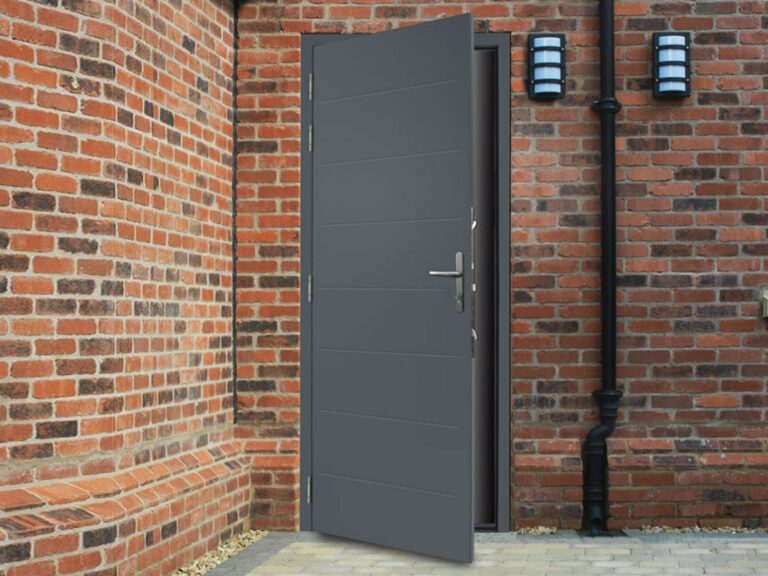
In today’s climate-conscious world, energy efficiency isn’t just a buzzword—it’s a regulatory requirement. If you’re involved in building projects across the UK, you’ve likely encountered the term “Part L compliant” in reference to doors and other building elements. But what exactly does this mean, and why is it crucial for your property?
What is Part L Compliance?
Part L refers to a section of the UK Building Regulations that specifically addresses the conservation of fuel and power in buildings. These regulations establish minimum energy performance standards for various building components, including doors, windows, and other thermal elements.
Being Part L compliant means that your doors meet or exceed these minimum energy efficiency standards, contributing to the overall thermal performance of your building.
The Importance of Part L Compliance
Energy efficiency isn’t just about ticking regulatory boxes. Part L-compliant doors offer several tangible benefits:
- Reduced energy bills: Better insulated doors minimise heat loss, reducing heating costs
- Improved comfort: Fewer drafts and cold spots create a more comfortable living or working environment
- Environmental impact: Lower energy consumption means reduced carbon emissions
- Future-proofing: Meeting current regulations helps avoid costly retrofits as standards tighten
- Property value: Energy-efficient features can enhance your property’s market value
Part L Requirements for Doors
The specific requirements for Part L-compliant doors vary based on:
- Building type (domestic or non-domestic)
- Door type (external, internal, or garage)
- Whether it’s a new build or renovation
U-Value Requirements
The most critical metric for Part L compliance is the U-value, which measures how effectively a door prevents heat transfer. Lower U-values indicate better insulation performance. Our doors are primarily used as external doors on non-domestic buildings.
Current Part L regulations specify maximum U-values for doors:
| Door Type | Maximum U-value (W/m²K) |
| External doors (non-domestic ) | 1.6 (1.4 Scotland) |
Air Permeability Standards
Beyond U-values, Part L-compliant doors must also meet air permeability standards to minimise unwanted air leakage. This is particularly important for industrial doors and those in commercial settings.
How to Achieve Part L Compliance for Doors
Material Selection
The materials used in door construction significantly impact thermal performance:
- Composite doors: Typically offer excellent thermal performance due to their insulated cores
- Steel doors: Offer excellent insulation when constructed with state-of-the-art insulation
- Timber doors: Solid timber has natural insulation properties, though performance varies by wood type and thickness
- Aluminium doors: While naturally conductive, modern designs incorporate thermal breaks to improve insulation
- uPVC doors: Cost-effective with good inherent insulation properties
Our range of Part L-compliant steel doors provides numerous options regardless of your project requirements.
Glazing Considerations
For doors with glazed sections, Part L compliance requires:
- Double or triple glazing
- Low-emissivity (Low-E) glass
- Warm edge spacer bars
- Inert gas filling (typically argon)
Installation Quality
Even the most thermally efficient door will fail to be truly Part L compliant if poorly installed. Professional installation ensures:
- Proper sealing around frames
- Minimal thermal bridging
- Correct adjustment of seals and gaskets
- Appropriate use of insulation around the door frame
Our professional installation services guarantee that your doors will perform to their full potential.
Part L Compliance for Different Building Types
Residential Buildings
For homes, Part L compliant doors are essential components of the overall dwelling emission rate (DER) and fabric energy efficiency (FEE) calculations. The 2021 updates to Building Regulations have made these requirements more stringent.
Commercial and Industrial Buildings
Non-domestic buildings face their own Part L compliance challenges. Industrial facilities often require specialised solutions such as high-speed doors or fire-rated doors that must balance operational requirements with energy efficiency.
Historic Buildings
Listed buildings and those in conservation areas may receive certain exemptions from standard Part L requirements, though improving energy efficiency is still encouraged where possible without compromising historical significance.
Verifying Part L Compliance
Documentation Requirements
To demonstrate Part L compliance, you’ll need:
- Manufacturer’s documentation showing U-values
- Installation certificates
- Energy ratings (similar to those used for windows)
- Calculations showing the contribution to overall building performance
Testing and Certification
Third-party testing and certification ensure that doors are truly Part L compliant.
Look for:
- British Fenestration Rating Council (BFRC) ratings
- British Standards Institute (BSI) certification
- CE marking (or UKCA marking post-Brexit)
Upgrading Existing Doors for Part L Compliance
If your current doors aren’t Part L compliant, several upgrade options exist:
- Door replacement: The most effective but costliest solution
- Weatherstripping and draught-proofing: Cost-effective improvements for minor issues
- Adding secondary glazing: For doors with glazed elements
- Thermal curtains or porches: Creating buffer zones to reduce heat loss
Future-Proofing Your Building
Upcoming Regulatory Changes
The UK’s commitment to net-zero carbon emissions by 2050 means that Part L requirements will continue to tighten. Choosing doors that exceed current standards provides a buffer against future regulatory changes.
Beyond Compliance: Aiming for Excellence
Going beyond basic Part L compliance can yield additional benefits:
- Access to green building certifications (BREEAM, Passivhaus)
- Eligibility for energy efficiency incentives and schemes
- Enhanced corporate social responsibility credentials
- Future-proofed building assets
Choosing the Right Supplier for Part L Compliant Doors
When selecting Part L compliant doors, partner with specialists who understand the regulatory landscape. At Pass Door Systems, we offer:
- Comprehensive knowledge of Building Regulations
- Doors that meet or exceed current Part L requirements
- Professional installation to ensure optimal performance
- Ongoing support and maintenance
Contact our team for expert advice on selecting the right Part L-compliant doors for your project.
FAQs About Part L Compliant Doors
What exactly does “Part L compliant” mean for doors?
Part L-compliant doors meet the minimum energy efficiency standards set out in Part L of the Building Regulations, which governs the conservation of fuel and power in buildings. This primarily relates to their thermal performance (U-value) and air permeability for doors.
How do I know if my existing doors are Part L compliant?
Check the door’s documentation for U-value information. For older doors without documentation, a building energy assessor can evaluate their performance. Generally, solid doors with good weather seals or modern glazed doors with double glazing are more likely to be compliant.
Can I improve my door’s energy efficiency without replacing it?
Yes, draught-proofing, adding weatherstripping, or installing thermal curtains can improve performance. However, for significant improvements, replacement with a modern Part L-compliant door is usually necessary.
Are there different Part L requirements for front doors versus back doors?
The requirements are based on whether the door is an external door (connecting to the outside) or an internal door, rather than its position. All external doors must meet the same U-value requirements regardless of their location in the building.
Do garage doors need to be Part L compliant?
Yes, if the garage is attached to the house and is heated. Unheated, detached garages may be exempt, but attached garages should have Part L-compliant doors to prevent heat loss from the main building.
How often do Part L regulations change?
Part L regulations are typically updated every few years as part of the government’s strategy to improve building energy efficiency. The most recent significant update was in 2021, with further changes expected as the UK progresses toward its net-zero carbon targets.
Are there any exemptions from Part L compliance for doors?
Listed buildings, buildings in conservation areas, and some temporary structures may receive exemptions. However, improvements are still encouraged where they can be made without compromising historical or architectural significance.
For more information about Part L-compliant doors or to discuss your specific requirements, visit our showroom or contact our technical team at Pass Door Systems.